


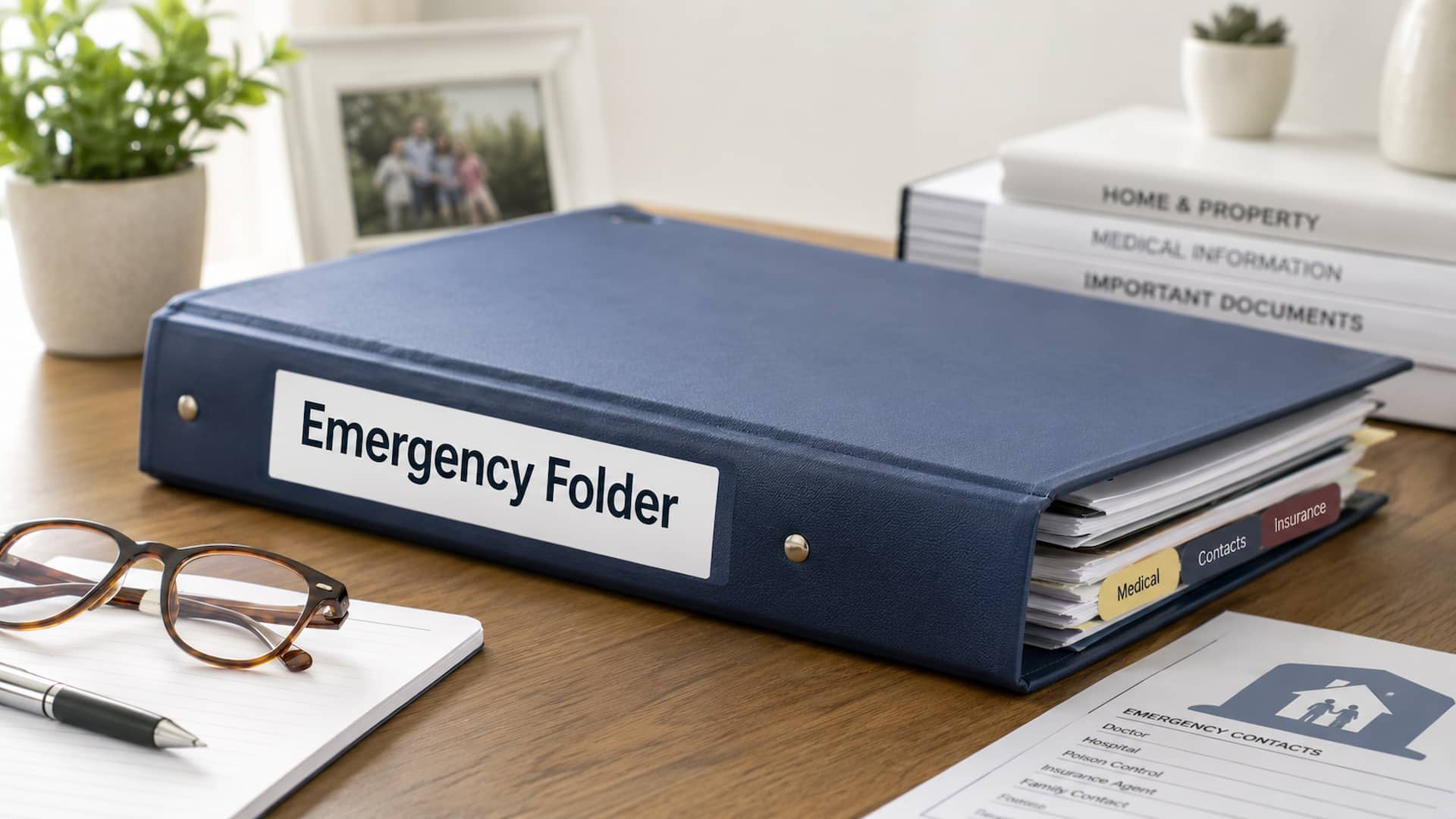

An emergency folder helps your family quickly find important documents, contacts, and instructions when something happens. Here is what you should absolutely include in 2026!
What Should Go in an Emergency Folder?
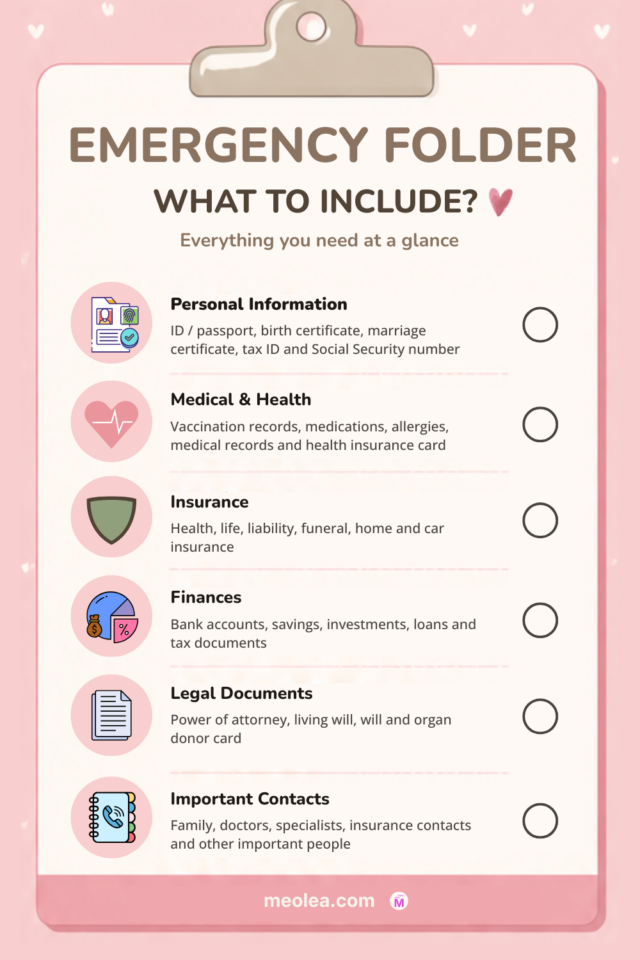
An emergency folder should contain the key information your family would need if you were suddenly unable to manage things yourself — important documents, medical details, insurance information, financial contacts, and your personal wishes.
We suggest you include at least this:
- Identification documents
- Insurance details
- Living will
- Power of attorney
- Emergency contacts
- Important subscriptions or financial obligations
- Digital access instructions
- Any funeral wishes
What is the purpose of an emergency folder?
The goal of an emergency folder is not to store every document you own. It is to give your family a clear roadmap so they can quickly find what they need and know what to do next.
The folder should give your family a clear overview of your life’s most important information — who to contact, which documents exist, where essential records are stored, and how to access critical accounts.
In practical terms, that means covering five areas: who you are, what you own, your health, your digital life, and your wishes. A folder that covers those five things gives the people you trust enough to act — without having to guess, search, or make decisions they were never prepared for.
Because so much of life now happens online, digital access instructions matter just as much as the physical documents.
Most people already have most of this information somewhere. The work is gathering it, labelling it clearly, and making sure someone else can find it.
Personal Identification and Essential Documents
Start with the documents that confirm your identity and legal status. These are the first things institutions, doctors, and family members will ask for.
You do not necessarily need to store the originals in the folder, but it should clearly state where they can be found. Even a simple note explaining where documents are stored can save hours of searching during an emergency.
Include or reference:
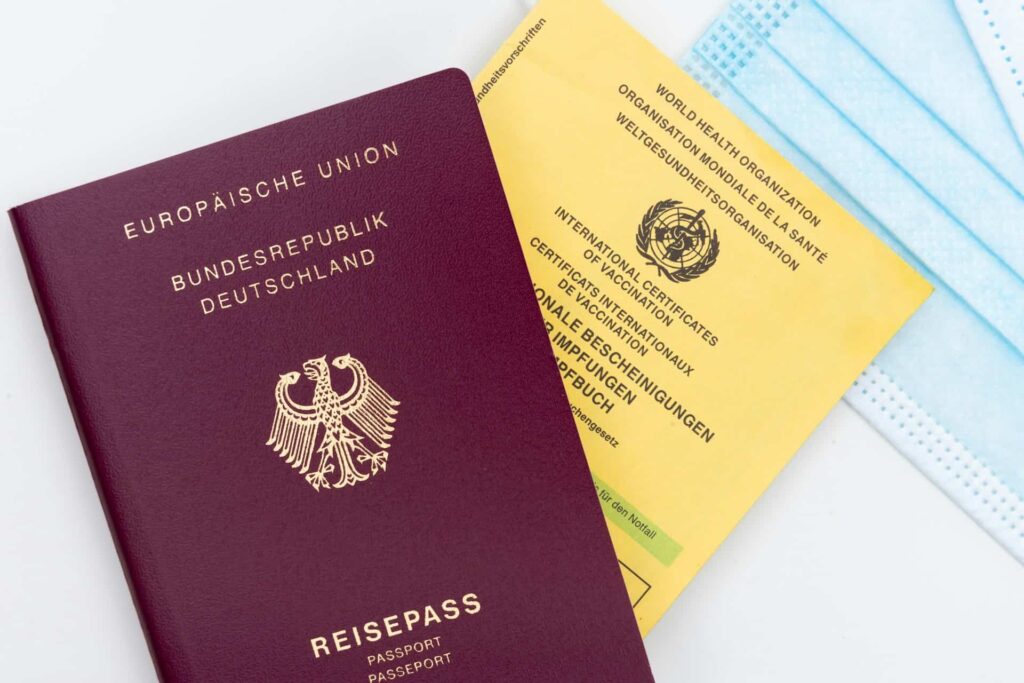
- Passport or national ID card
- Birth certificate
- Marriage or civil partnership certificate
- Divorce decree (if applicable)
- Citizenship documents or residency permits
- Health insurance card and policy number
- Tax identification number
💡 With Meolea, you can create an emergency folder and give your loved ones access to it in just a few clicks.
Medical Documents and Advance Directives
Medical information becomes extremely important if you cannot communicate your wishes.
If you have a living will or advance directive, this is one of the most important things to include. These documents explain what medical treatment you want or do not want if you are unable to make decisions yourself. Without them, family members and doctors are left guessing or making decisions they are not equipped to make alone.
If you have given someone power of attorney for healthcare decisions, that document belongs here too.
Beyond the legal documents, include basic medical information that would help a doctor or family member act quickly:
- Living will or advance directive
- Healthcare power of attorney
- Name and contact details of your GP and any specialists
- Current diagnoses and relevant medical history
- Medications and dosages
- Known allergies or adverse reactions

Insurance Policies
Families often struggle to find insurance information at exactly the moment they need it most so a clear overview here saves significant time and stress.
You do not need to store every policy document in full. What the folder needs is enough for your family to know who to call and what is covered. A one-page summary for each policy is enough: the insurer, the policy number, the type of cover, and a contact number.
Cover at minimum:
- Life insurance
- Health insurance
- Home and contents insurance
- Car insurance
- Any disability, income protection, or long-term care policies
A note on beneficiaries: if any policies have named beneficiaries, make a note of who they are and when those designations were last reviewed. This is one of the most commonly overlooked details in estate planning.
Emergency Contacts
A list of who to call and in what order is one of the simplest things to include and one of the most useful things your family will reach for first.
This is not just close family. Think about who would need to be informed, who has professional knowledge of your affairs, and who your family might not know to contact without guidance.
Include:
- Close family members with relationship noted
- Trusted friends who should be informed
- Solicitor or notary
- Financial advisor or accountant
- Executor of your will, if appointed
- GP and any key medical contacts
For each person, note their name, their relationship to you, and their preferred contact method. If someone has power of attorney, mark that clearly.

Subscriptions and Financial Commitments
Ongoing payments continue running whether or not someone is managing them. A short overview here helps your family avoid unnecessary costs and understand your financial picture quickly.
This section does not need to be a full financial statement. It is a practical list of what is coming in and going out, and what would need to be cancelled or transferred.
Include:
- Bank accounts and the institutions where they are held
- Investment accounts and pension details
- Property information and mortgage details
- Recurring subscriptions (streaming, phone, software, memberships)
- Any outstanding loans or regular financial commitments
- The contact details for your accountant or financial advisor
💡 Meolea lets you track subscriptions and add clear instructions for how and where to cancel them, so nothing keeps running that should not.
Digital Accounts and Password Access
A growing part of life exists online, and without clear instructions, digital accounts can become one of the most time-consuming things for a family to untangle.
Email accounts, cloud storage, social media, online banking, and digital subscriptions often contain important information or memories. Without access, families can struggle to manage these accounts or preserve important data.
Instead of writing down every password, it is usually safer to note where your password manager is stored and how a trusted person can access it if necessary.
Also worth noting:
- Any cryptocurrency wallets or digital assets
- Cloud storage accounts where important files or photos are kept
- Social media accounts and any preferences for what should happen to them
- Subscriptions with automatic renewals that will need to be cancelled
💡 Meolea lets you do that easily!
Funeral Wishes and Personal Preferences
When wishes are written down, families do not have to guess. That matters more than most people expect.
This section does not need to be detailed. A few clear sentences about your preferences can give your family genuine guidance during a time when making decisions feels overwhelming. Even noting a preference between burial and cremation, or whether you would like a quiet gathering or a larger celebration, removes one of the hardest parts of an already difficult situation.
Some people go further and include:
- Preferred funeral arrangements and any specific requests
- Music, readings, or other wishes for a memorial
- Notes on who should be informed beyond close family
- Any preferences about how you would like to be remembered
At Meolea, this section connects to something deeper. Alongside your practical wishes, you can write personal letters to the people you love, record parts of your life story, and set exactly when those things are shared. The folder becomes not just a filing system but something your family will genuinely be glad exists.

Paper Folder or Digital System?
Most people end up using both — a physical folder at home for the basics, and a digital system that trusted people can reach from anywhere.
A physical binder or envelope kept somewhere safe covers the immediate, local need. But it only helps if someone is there, knows where to look, and can access it. A digital system like Meolea solves the gap: it means the right information is reachable, whether someone is in another city, in a hospital waiting room, or dealing with something unexpected while you are away.
What matters most is that the information is organised, up to date, and accessible to the people who may need it. A folder that exists but cannot be found is not much better than no folder at all.
The Most Important Step Is Starting
An emergency folder does not need to be complete to be useful. Even a basic version covers more than most families have.
Start with identification, your main financial contacts, and one trusted person’s phone number. Add to it when you have time. Review it once a year or after any significant life change — a move, a new job, a change in health, a new family member.
The people who benefit most from an emergency folder are not the ones who made it. They are the family members who will one day be grateful it exists.
Meolea gives you a guided structure to build yours: documents, wishes, personal messages, and the people who should receive them — all in one place, with you in control of who sees what and when.
Frequently Asked Questions About Emergency Folders
Do I need to include original documents or are copies enough?
Copies are usually fine for the folder itself. What matters more is that the folder clearly notes where originals are kept — a safe, a solicitor’s office, a specific drawer at home. In most situations, a copy is enough to get things moving while the original is retrieved.
What about documents from another country?
Include them. If you have residency permits, property documents, or insurance policies from another country, note them in the relevant sections and add any additional context about which jurisdiction they relate to. If a solicitor or legal advisor in that country is involved in your affairs, include their contact details too.
Should children or dependants have their own section?
Yes, if it is relevant. If you have children, it is worth including their key documents — birth certificates, health records, school contacts — as well as any guardianship arrangements you have in place. This is particularly important if you are a single parent or if your children’s other parent is not involved in day-to-day care.
How detailed does each section need to be?
Detailed enough that someone unfamiliar with your affairs could act on it. That does not mean exhaustive — it means clear. A one-line note explaining where something is stored is often more useful than a full copy of the document itself.
What is the difference between an emergency folder and a will?
A will is a legal document that determines what happens to your estate after you pass away. An emergency folder is a practical guide that helps your family manage everything in the days and weeks that come first — finding documents, contacting the right people, understanding your wishes. Both matter, and they work together. See our full guide on emergency folders vs wills.