



If you have been searching for how to get your important documents organised for your family, you have probably come across both terms. Emergency folder. Emergency binder. Sometimes what-if binder, or in case of death file. It can feel like there must be a difference, or you would not be seeing so many different names.
There is not. They all mean the same thing.
What is the difference between an emergency binder and an emergency folder?
An emergency binder and an emergency folder are different names for the same concept: a collection of your most important documents, contacts, and information that your family can access when they need to manage things on your behalf.
The word “binder” tends to be more common in the United States, where ring binders are the default way people think about organising paperwork at home. “Folder” is more common in the UK, Europe, and international contexts. Neither term implies a specific format or set of contents. Both refer to exactly the same idea.
You might also see it called:
- A what-if binder
- An in case of death file
- A legacy folder
- A family emergency plan
- A life organiser
All of these are the same thing. The name matters far less than what goes inside it.
Does the format matter?
What matters is not what you call it or what it looks like, but whether the right people can find it when they need it.
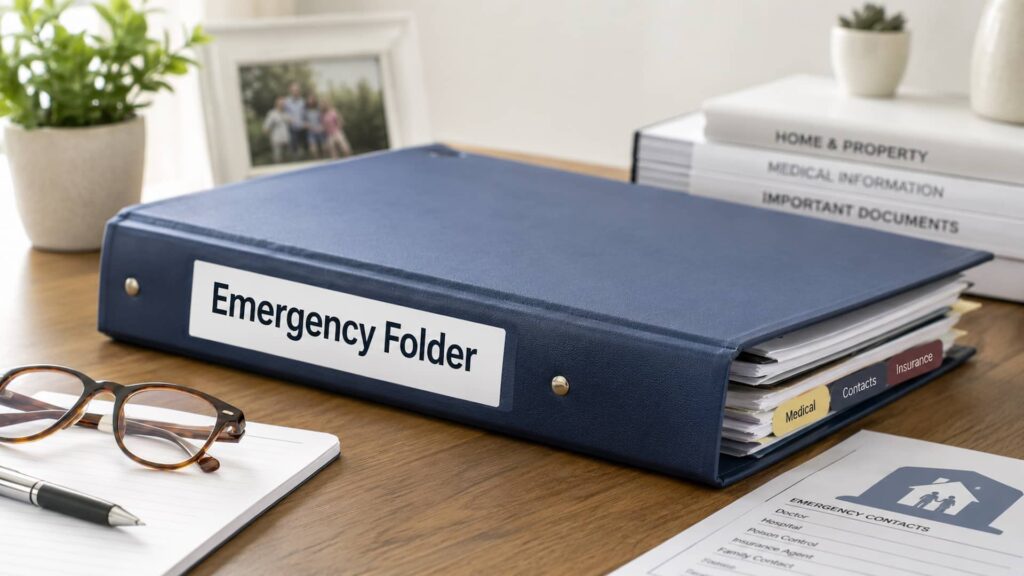
A physical ring binder at home is the traditional format and it works well if someone who knows where it is can get to it quickly. A labelled folder in a filing drawer, an envelope with a solicitor, or a printed document in a home safe all work the same way.
The limitation of any physical format is accessibility. If your family is not at home, or if something happens while you are travelling, a binder on a shelf does not help.
A digital platform like Meolea solves that. Instead of a physical folder or binder, everything lives in one secure place that your trusted contacts can reach from anywhere. You control who sees what and when, your information stays current, and your family gets a structured guide rather than a pile of documents to sort through on their own.
💡Check out this comparison between physical vs digital emergency binders.
What should go in it, whatever you call it?
Whichever term you prefer, a well-prepared emergency folder or binder covers the same six areas:
- Personal identity documents
- Medical information and advance directives
- Insurance policies
- Financial accounts and contacts
- Legal documents including your will and power of attorney
- Important contacts and digital access instructions
For a full breakdown of each category, see our complete guide on what should go in an emergency folder.
The bottom line
Call it whatever feels natural. Binder, folder, what-if file, legacy planner. The name is not the point. The point is that the people you love can find what they need, when they need it, without having to search.
If you have been putting it off because you were not sure where to start, Meolea gives you a guided structure to build yours in one place, with the right information reaching the right people at the right time.